School floor sanding in West Brompton, SW10
School floors in West Brompton, SW10 take a fair amount of punishment. Classroom chairs scrape across the boards, hundreds of shoes carry grit through corridors, and cleaning chemicals gradually weaken the protective lacquer. Once that seal starts breaking down, timber absorbs dirt and moisture, joints open up, and a perfectly serviceable floor can become a hygiene and slip concern.
At West Brompton Floor Sanding, we provide practical timber repairs, controlled sanding and commercial-grade finishing for educational premises. Our School Floor Restoration in West Brompton service is intended for nurseries, primary and secondary schools, independent schools, academies, colleges and other busy learning environments where closing an entire building is rarely an option.
Some floors need a full sand back to clean timber; others need local repairs and a properly specified maintenance coat. We assess both options before recommending the work. Our approach to School Floor maintenance in West Brompton and School Floor Refinishing in West Brompton considers the timber’s remaining thickness, daily footfall, cleaning regime and the time available before pupils return.
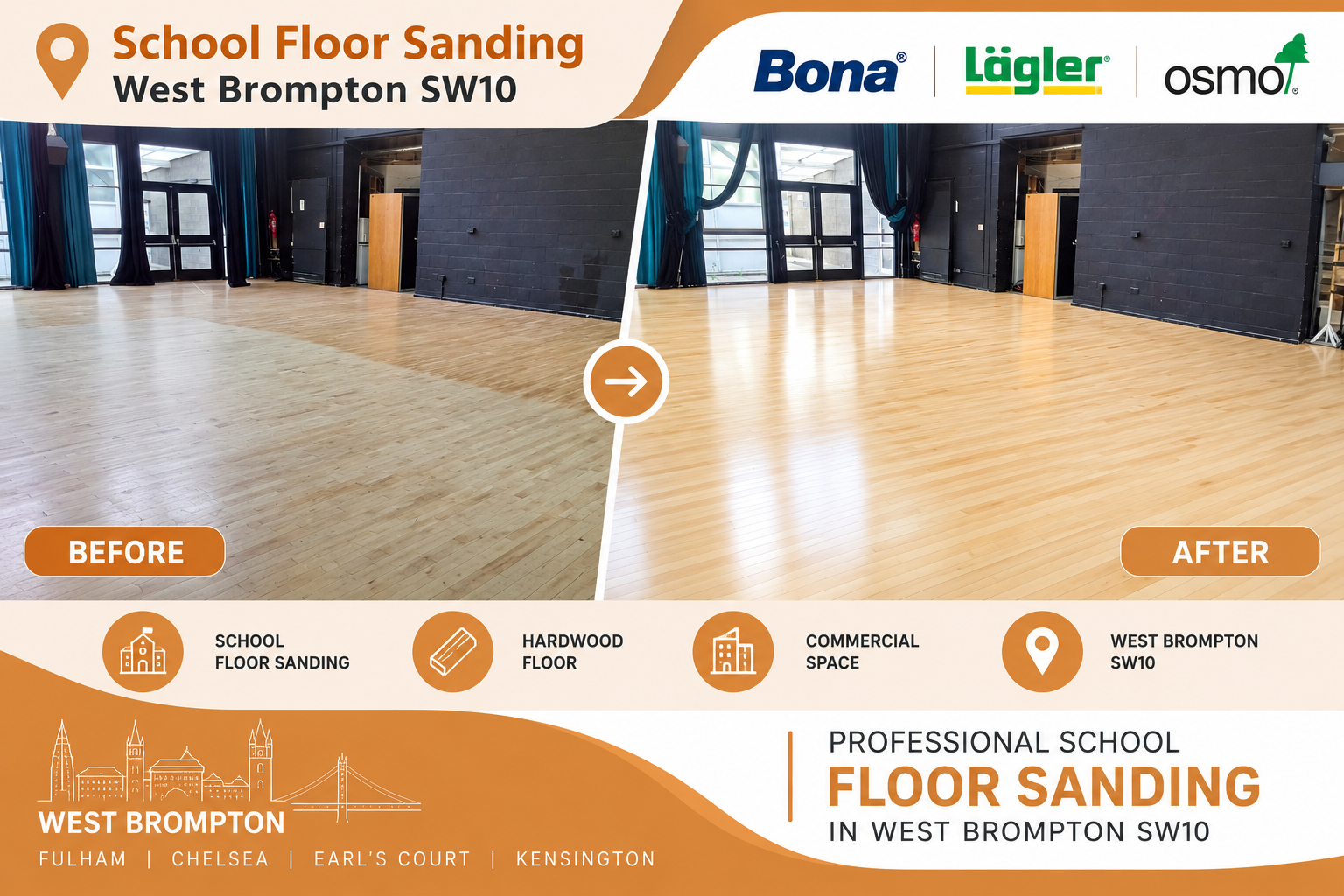
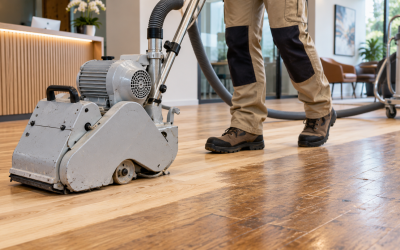
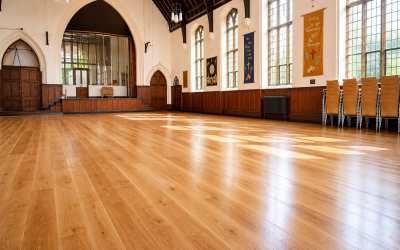
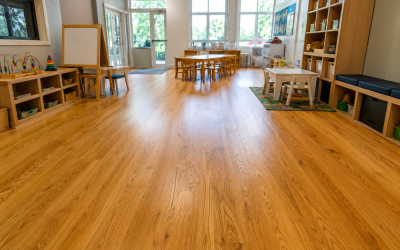
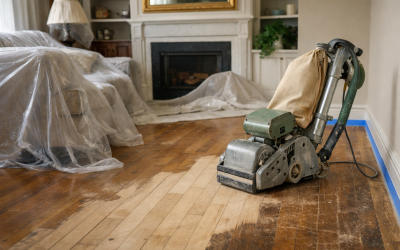
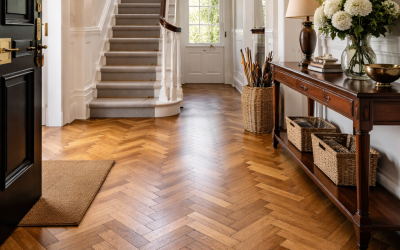
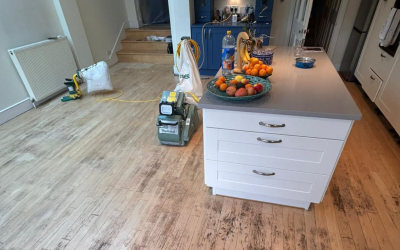
School floor sanding in West Brompton SW10 — before-and-after wooden floor restoration for educational and commercial spaces, featuring Bona, Lägler and Osmo products.
School Timber Floors in SW10: Why Ordinary Sanding Is Not Enough
West Brompton has a mixture of Victorian conversions, Edwardian institutional buildings and more modern educational facilities. Around Finborough Road, Old Brompton Road, Earl’s Court and the streets adjoining Brompton Cemetery, older properties can contain suspended timber floors, traditional softwood boards and parquet installed over several different types of subfloor.
Those constructions demand a different approach from sanding a modern domestic living room. A pitch pine floor laid across ageing joists behaves differently from quartersawn oak parquet fixed to screed, while old teak blocks can contain natural oils that affect finish adhesion. We identify the timber and inspect the fixing system before choosing abrasives, fillers or coatings.
School corridors, halls, classrooms and stair landings also experience concentrated wear rather than evenly distributed traffic. Entrance grit, wheeled teaching equipment, chair legs and repeated wet cleaning can destroy a domestic-grade finish long before the underlying timber needs replacing.
Common Problems Found in Educational Buildings
- Open joints and dirt traps: Gaps between floorboards or parquet blocks retain food debris, dust and cleaning residues, creating avoidable hygiene problems.
- Unstable parquet: Loose blocks can move underfoot, lift at their edges and develop into trip hazards, particularly around doorways and busy circulation routes.
- Unreliable slip resistance: Worn lacquer, unsuitable polishes and cleaning-product build-up may change surface friction. Slip performance needs assessment rather than assumptions based on appearance.
- Moisture entering exposed timber: Once the seal fails, repeated wet mopping can encourage swelling, raised grain and deterioration around joints.
- Uneven sanding history: Older school floors may have been sanded several times. Further aggressive sanding can weaken parquet tongues, expose fixings or reduce the service life of the timber.
- Coating contamination: Silicone sprays, wax dressings and incompatible cleaning chemicals can interfere with new lacquer adhesion and cause fisheyes or premature peeling.
Applying an off-the-shelf floor polish over these defects seldom solves the problem. It can seal contamination beneath another layer, disguise movement temporarily and leave the underlying structural issue untouched.
School Floor Sanding and Restoration: Our Working Process
A successful school floor restoration starts with the condition survey, not the sanding machine. We establish which rooms can be isolated, what repairs are needed and how the surface will be tested and handed back for use.
Step 1: Subfloor Audit and Moisture Testing
We begin by inspecting the boards or blocks for movement, raised edges, hollow areas, historic repairs and previous coating failure. On older sites, we check for excessive deflection, damaged fixings and signs of damp around external walls, entrances and ground-floor rooms.
Timber moisture readings are taken using a suitable calibrated meter. Where parquet is bonded to concrete or screed, subfloor moisture assessment may include an in-situ hygrometer test in accordance with the applicable flooring guidance, rather than relying on a quick surface reading.
If moisture levels are unsuitable, sanding and sealing are postponed until the cause has been investigated. A two-component coating cannot compensate for damp beneath timber, and covering a wet subfloor can lead to failed adhesion or lifted blocks.
Step 2: Timber Repairs, Re-bonding and Resin Gap-Filling
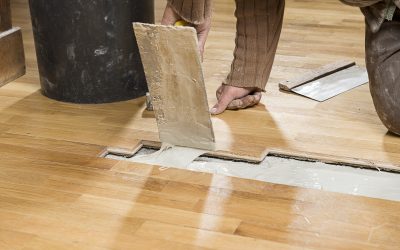
Before sanding, loose boards are secured, projecting fixings are dealt with and unstable parquet is lifted where necessary. Salvageable blocks are cleaned and re-bonded using a suitable silane-based flexible parquet adhesive, selected with regard to the subfloor, timber species and manufacturer’s installation instructions.
For fine, stable joints, we can use a resin-slurry gap-filling system mixed with clean sanding dust from the floor. Larger gaps usually require properly fitted timber slivers or matching replacement sections because a brittle filler pushed into a moving joint is unlikely to stay there.
Matching old timber is not simply a question of finding a similar colour. Quartersawn oak, pitch pine and teak each have different grain, density and finishing characteristics. Replacement timber is selected to sit as naturally as possible with the existing floor while maintaining a sound fixing.
Step 3: HEPA Dust-Controlled Sanding and Surface Preparation
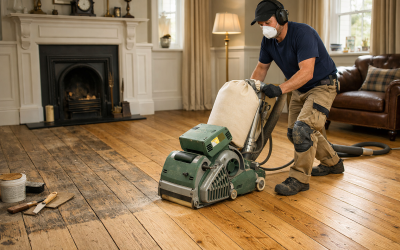
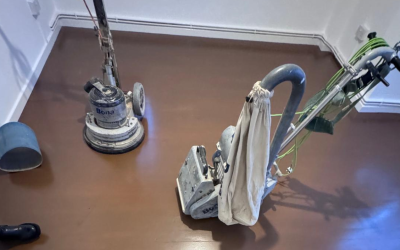
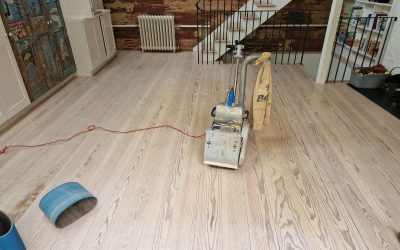
For the main sanding stages, our specified approach uses professional belt-sanding equipment such as the Lägler Hummel, with progressively finer abrasive grades. The precise sequence depends on the timber, old finish and depth of damage; there is no sense removing sound wood unnecessarily.
Edge sanders and detail equipment are used around skirting, radiator pipes and awkward corners. Fine dust is managed through compatible extraction equipment with HEPA H14 filtration where specified, alongside room isolation and suitable final vacuuming.
H14 filtration is one part of dust control, not a promise that sanding produces no dust. On occupied educational sites, the working area must be separated from pupils and staff, with controlled access, suitable ventilation arrangements and a documented cleaning inspection before reopening.
Old coatings are assessed before mechanical removal. Where the building’s age or survey information suggests hazardous materials may be present, including lead-containing finishes or asbestos-containing adjacent materials, the relevant checks must be completed before disturbing them.
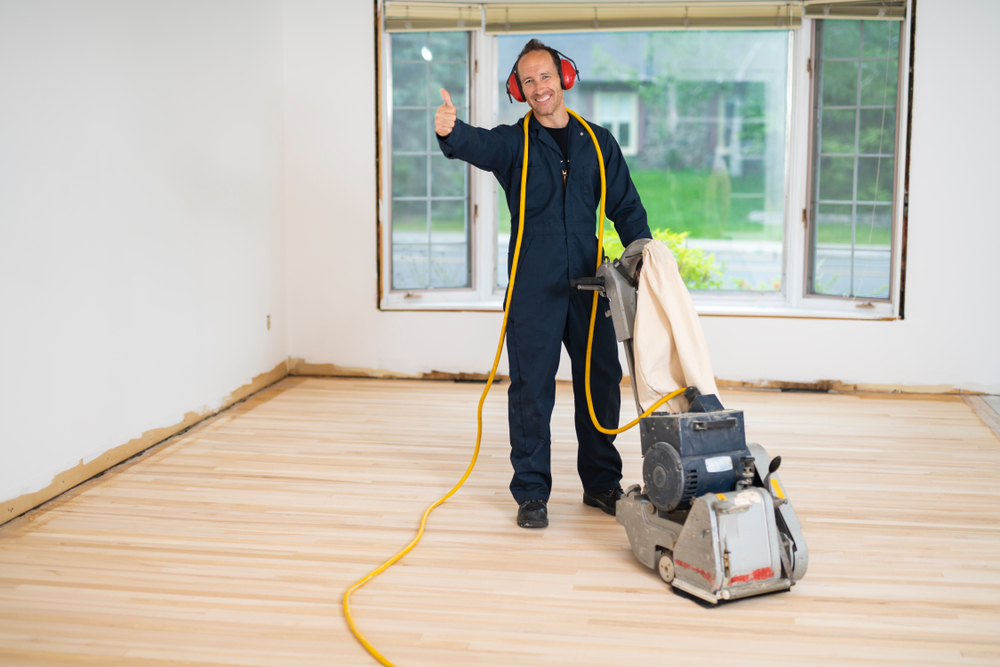
Professional wood floor sanding in West Brompton, SW10, preparing timber floorboards for a smooth, refreshed finish.
Step 4: High-Traffic Lacquers, Hardwax Oils and Anti-Slip Finishes
The finish is selected for how the room is used, not simply how glossy the sample looks. A school assembly hall, a nursery playroom and a music teaching room can have very different requirements for cleaning, traction, repairability and resistance to abrasion.
Two-Component Waterborne Polyurethane Lacquer
For heavily used classroom and corridor floors, a 2K waterborne polyurethane lacquer is often a sensible specification. The hardener introduces a cross-linking reaction that improves the coating’s mechanical and chemical resistance when it is mixed, applied and cured correctly.
One established example is Bona Traffic HD commercial floor lacquer. Its published technical information gives a typical recoating interval of 2–3 hours and indicates that full traffic may resume after approximately 12 hours under specified conditions. Actual handover depends on temperature, humidity, coating thickness and the entire applied system.
Two-component products also have a limited working life after the catalyst is introduced. We observe mixing ratios, pot life and ventilation requirements rather than trying to stretch leftover material across the next room.
Hardwax Oil for Suitable Timber Areas
Hardwax oils can be useful where the timber’s natural appearance and the ability to undertake local maintenance are important. However, an oil system should not be chosen automatically for a classroom exposed to frequent spills or aggressive cleaning products.
For appropriate applications, Osmo Polyx-Oil Anti-Slip provides an alternative finishing system with published R9 and R11 variants. Its product guidance indicates approximately 8–10 hours of drying time between coats under suitable conditions, although reopening and full-service loading must follow the relevant technical data.
Slip Resistance and Finish Compatibility
Where slip performance is a specific concern, we consider the proposed finish alongside the floor’s actual use and cleaning conditions. Pendulum testing historically associated with BS 7976-2, and the current BS EN 16165 pendulum method, can provide a measured Pendulum Test Value (PTV) rather than a subjective judgement about whether a floor feels slippery.
A wet PTV of 36 or above is commonly used as a low-slip-potential benchmark on a level pedestrian surface, but the appropriate assessment depends on the location and foreseeable contamination. An R9 or R11 ramp classification must not be treated as interchangeable with a pendulum result.
We also review low-emission product documentation, including EMICODE EC1 or EC1 Plus ratings where available and applicable. Not every commercial lacquer or hardwax oil carries an EC1 Plus classification, so product emissions claims should be checked against the exact system being supplied.
Step 5: Aftercare and School Floor Maintenance Protocols
A well-finished floor can still wear prematurely if it is cleaned with the wrong chemicals. Strong alkaline cleaners, uncontrolled wet mopping and unsuitable polish dressings may damage the protective system and change the friction of the surface.
We recommend entrance matting, grit removal, suitable pH-neutral cleaning products and furniture feet that do not leave concentrated abrasion marks. Cleaning staff should also have access to the finish manufacturer’s maintenance instructions, including dilution guidance and any restrictions during the initial curing period.
For schools with substantial daily footfall, periodic condition inspections and planned maintenance coats can help avoid repeated full sanding. It is generally more economical to renew an intact protective layer than to wait until traffic has cut through into bare timber.
Working Around Term Dates, Safeguarding and Occupied School Buildings
A school caretaker or facilities manager cannot always hand over an empty building for a fortnight. Breakfast clubs, nursery sessions, examination timetables, evening classes and holiday programmes can leave only limited access windows.
We plan restoration around the working calendar, with clear arrangements for deliveries, dust containment, protected access routes, room security and material storage. West Brompton sites with restricted entrances or limited parking around Finborough Road and the Earl’s Court area may also need a specific unloading plan.
| Working Shift | Operational Benefits | Suitable Facilities |
|---|---|---|
| Overnight Working | Allows controlled work outside teaching hours where noise restrictions, ventilation and coating cure times permit. Reopening is subject to inspection and confirmed readiness. | Secondary schools, colleges, universities, tutoring centres and administration areas. |
| Weekend Phased Works | Provides longer uninterrupted periods for sanding, repairs and coating, reducing interference with weekday lessons. | Primary schools, independent schools, academies, language schools and teaching halls. |
| Sectional Restoration | Isolates individual rooms or wings while maintaining agreed circulation and fire escape routes elsewhere in the building. | Nurseries, Montessori schools, SEN facilities, childcare centres and occupied campuses. |
Night working is not automatically the quickest option. Heavy sanding equipment can create noise and vibration, particularly in converted Victorian buildings with neighbouring residential accommodation. We assess local restrictions and the building’s acoustic behaviour before committing to an out-of-hours programme.
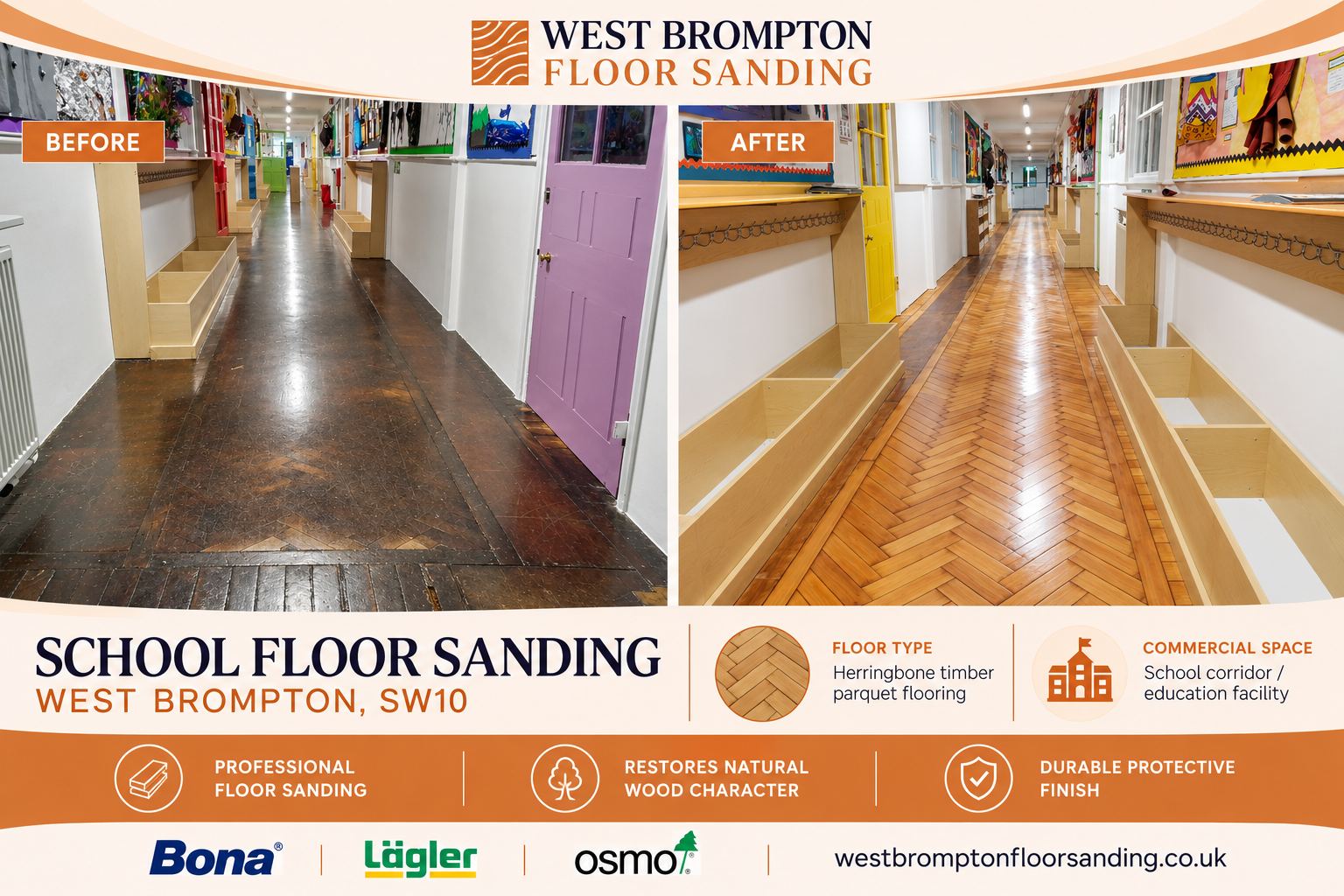
School Floor Sanding in West Brompton, SW10 – Before and After Herringbone Parquet Floor Restoration
When Can Pupils and Staff Walk on the Floor Again?
Dry-to-touch, light foot traffic and full chemical cure are different stages. A fast-curing 2K lacquer may permit carefully controlled foot traffic within the manufacturer’s published interval, but dragging desks, replacing heavy furniture or wet cleaning too early can mark the finish.
Some systems allow light use after roughly 6 hours and fuller pedestrian use after around 12 hours under controlled conditions. That does not mean every school floor is ready for lessons the following morning, particularly after extensive repairs, multiple coats or work in cold, poorly ventilated rooms.
The reopening plan must also account for the safe condition of escape routes, residual odour, room ventilation, final cleaning and any additional safeguarding requirements. For rooms occupied by very young children or those with particular sensitivities, the product safety information and agreed reoccupation criteria require especially careful review.
School Floor Restoration Across West Brompton and Nearby SW10
Our local service covers educational premises in West Brompton and the surrounding SW10 streets, including locations around Finborough Road, Ifield Road, Redcliffe Gardens, Old Brompton Road and the approaches towards Fulham Road. We also discuss projects in neighbouring Earl’s Court, Chelsea and Fulham.
Properties near the Brompton Cemetery Conservation Area and surrounding period streets may contain original joinery, narrow staircases and mixed-age floor construction. Older buildings can also have limited electrical capacity, making a pre-start check of machine supplies and safe cable routing particularly important.
Educational Premises We Can Assess
- Nurseries, preschools, daycare centres and Montessori classrooms.
- State primary schools, secondary schools, academies and independent schools.
- Boarding schools, international schools and specialist educational establishments.
- Special educational needs and disability (SEND) teaching facilities.
- Sixth-form colleges, further education colleges and vocational training centres.
- Universities, higher education facilities and adult learning centres.
- Music schools, dance studios, art classrooms and performing arts teaching spaces.
- Sports academies, activity rooms and suitable timber-floored assembly halls.
- Language schools, tuition centres and after-school clubs.
Purpose-designed sports floors need particular care. Line markings, sprung construction and the relevant sports-surface performance standards must be considered before sanding or specifying a new coating. We do not treat a sprung gymnasium floor as an ordinary classroom floor.
Health, Safety and Documentation for School Floor Sanding
Educational premises need a controlled worksite, not simply a contractor with a dust extractor. Before work begins, the project requirements should establish who controls the area, how access is restricted and which activities can safely continue nearby.
A school restoration package can include the following documentation and controls, as appropriate to the contract:
- RAMS: Site-specific risk assessments and method statements covering sanding equipment, dust, electrical safety, manual handling, chemical application and access arrangements.
- COSHH assessments: Assessment of hazardous substances, including wood dust, coating hardeners, cleaning agents and other products used during restoration.
- Competency checks: Relevant training and site-competency evidence, including CSCS cards where required by the principal contractor or site rules.
- Insurance verification: Appropriate public liability and, where applicable, employers’ liability cover, with current certificates available for the purchasing or facilities team to review.
- Safeguarding: Agreed identification, supervision, access and DBS-check arrangements in accordance with the school’s safeguarding policy and the nature of the work.
- Slip assessment: A project-specific review of slip risk, with documented pendulum testing where required by the specification.
- Coating records: Product technical data, Safety Data Sheets, mixing procedures and the agreed drying and reoccupation requirements.
Any required CSCS records, insurance certificates, safeguarding evidence and project-specific RAMS should be confirmed before appointment. These are matters to verify during procurement rather than assume from a quotation.
We also consider emergency exits, fire door operation and safe segregation. A freshly coated corridor cannot be taken out of service without an agreed alternative route where the building remains occupied.
School Floor Sanding Prices in West Brompton, SW10
The cost depends on the condition of the timber, floor area, number of repairs, required finish and access arrangements. A clear, lightly worn classroom floor will generally require less preparation than an old parquet corridor with widespread adhesive failure and damaged joints.
Out-of-hours working, restricted loading, sectional handovers and specialist slip testing can also influence the specification and labour allowance. These items should be identified during the survey rather than appearing unexpectedly after work begins.
You can review our West Brompton floor sanding prices for published guide rates. Those figures are a starting point; commercial school work needs a site-specific quotation showing preparation, repairs, finishing, access requirements and any separately priced testing.
What We Need to Prepare an Accurate Quotation
- Approximate room dimensions or floor plans, including corridors and stair areas.
- Clear photographs of the timber, worn sections, open joints and any loose blocks.
- Details of previous sanding or coating work, where known.
- Preferred school holiday dates, weekend availability or permitted working hours.
- Information about safeguarding, access restrictions and required site documentation.
We can use photographs or a short video to make an initial assessment. A physical site survey is then used where necessary to confirm the timber condition, moisture readings, repairs and working programme before the final scope and price are agreed.
For an indication of the appearance that professional sanding and refinishing can achieve, visit our floor sanding gallery. Existing photographs illustrate restoration finishes, although the actual result in a school depends on timber species, age and previous treatment.
Why Choose West Brompton Floor Sanding for Educational Premises?
School restoration is as much about planning as it is about handling a sanding machine. The work needs to be organised so that floor repairs are completed properly, the chosen finish has sufficient time to cure and the building can be handed back without creating problems for teaching staff or cleaners.
Our quotation approach concentrates on the practical details: timber condition, suitable repair methods, dust-control arrangements, finish specification, access, working hours and handover requirements. Where a specialist test or additional contractor is needed, that should be identified at the survey stage.
We encourage facilities managers to request written confirmation of operative competence, applicable CSCS accreditation, commercial insurance and site-specific safety documentation before work starts. A clear scope of work helps the school compare quotations on the same basis rather than relying on a low headline price per square metre.
Frequently Asked Questions About School Floor Sanding
Can school floors be sanded during term time?
Yes, provided the work can be safely isolated and the timetable allows for sanding, repairs, coating and curing. In many cases, weekends or school holidays offer better conditions, particularly where classrooms share entrances or ventilation systems.
Is dust-controlled sanding suitable for nurseries?
Professional extraction and HEPA filtration can substantially reduce airborne dust, but they do not eliminate every particle. Nursery work requires effective segregation, controlled access, suitable cleaning and a clear handover procedure before children return.
Do all school floors need sanding back to bare wood?
No. If the existing coating is sound, compatible and sufficiently thick, a prepared maintenance recoat may be possible. Floors with widespread peeling, exposed timber, incompatible polish contamination or major repairs may need full sanding.
How long does school floor lacquer take to cure?
It depends on the coating system, temperature and humidity. Certain fast-curing 2K waterborne lacquers allow pedestrian traffic after approximately 12 hours under specified conditions, but heavy furniture and wet cleaning may require longer restrictions.
Can loose parquet blocks be repaired instead of replacing the floor?
Often, yes. Individual blocks can sometimes be lifted, cleaned and re-bonded with a suitable adhesive, provided the substrate is stable and dry. Widespread failure may require a more substantial repair programme.
Will an anti-slip finish make the floor completely slip-proof?
No coating makes a floor slip-proof in every condition. Slip resistance depends on the surface, footwear, contamination and cleaning regime. Where required, pendulum testing provides an objective basis for assessing the finished floor.
Can work be arranged over half-term or the summer holidays?
School holiday periods are often suitable because they provide uninterrupted working and curing time. The programme should still account for cleaning teams, maintenance contractors, holiday clubs, security arrangements and any planned furniture moves.